“We are living through a period in which biological knowledge is advancing at extraordinary speed, yet public trust in science is increasingly fragile.” (Nature, 2026).
With global health, climate change, and biotechnology at the forefront of world events, there has never been a more important time to study the biological sciences. As the above quote highlights, science does not stand still — our understanding of living organisms can shift rapidly as new discoveries are made. A level biology is the first step on the journey towards becoming one of the scientists shaping responses to the major biological challenges of our time.
Without biologists, we would not have the genomic tools that allow us to track emerging pathogens in real time. We would not have the breakthroughs in immunology that underpin modern vaccines and personalised medicine. We would not have the advances in biotechnology that are helping us tackle antimicrobial resistance, engineer sustainable materials, or protect ecosystems under threat. Today’s scientists collaborate across disciplines more than ever before — biologists working alongside computer scientists, engineers, clinicians and environmental researchers to solve problems that affect every aspect of society.
The focus of A level biology is to give future scientists a grounding in advanced biological principles, enabling them to develop the analytical, problem‑solving and practical skills needed to apply that knowledge independently. Biology sits at the heart of major scientific fields such as Biochemistry, Biotechnology, Neuroscience and Biophysics. Even Astrobiology — the study of life beyond Earth — is a rapidly expanding specialism. You will find biologists working in almost every setting imaginable: from research laboratories and hospitals to rainforests, coral reefs, deserts and polar ice; from classrooms and conservation centres to the International Space Station; even within government, industry and global health organisations.
Join us in the Harington School biology department on this fascinating journey into the living world.
COURSE CONTENT AND AIMS
A level biology allows students to develop a scientific curiosity and logical approach to answering problems. It does this by stimulating a natural interest in how the human body functions and how we fit into the world around us. Students will learn about everything from the Biochemistry of living things to the Ecological aspects of how all organisms fit together within the Earth community. Studying biology A level enables the development of key skills such as how to be analytical, critical and logical while cultivating scientific interest and stimulating inquiring minds.
TRIPS AND VISITS
- Biology in Action: A level lecture days, to hear talks from prominent UK scientists – speakers this year included Lord Robert Winston and Professor Steve Jones.
- Cambridge Botanical Gardens
- Twycross Zoo
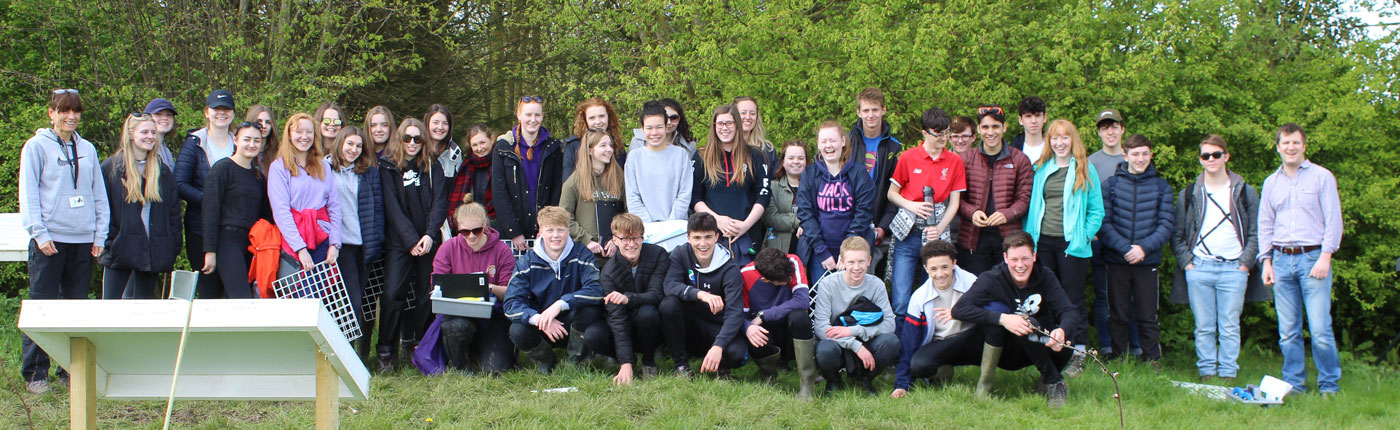
- A three-day field trip at the end of the year to study and put into practice ecology and field work sampling techniques.
PROGRESSION
This course is vital to many careers such as medicine, dentistry, science and veterinary science, but also opens up great opportunities in diverse fields. The search for plentiful, healthy foods, new medicines, and sustainable agriculture always requires the versatile, investigative and analytical skills of biologists, which are also valued in many non-scientific industry sectors. The course is suitable for progression to biological and some medical courses. Biology is required for courses such as medicine, dentistry or veterinary medicine.
ASSESSMENT
3 written papers, 2 hours each. Papers 1 and 2 are both worth 35% of the total mark and examine Topics 1-4 (first year topics) and Topics 5-8 (second year topics), respectively.
Paper 3 covers all 8 topics and is worth 30% of the final mark.
ENTRY REQUIREMENTS
For admission to A level biology, our usual minimum requirements are:
-
Students wishing to study Science or Maths at A level will need to achieve a grade 7.